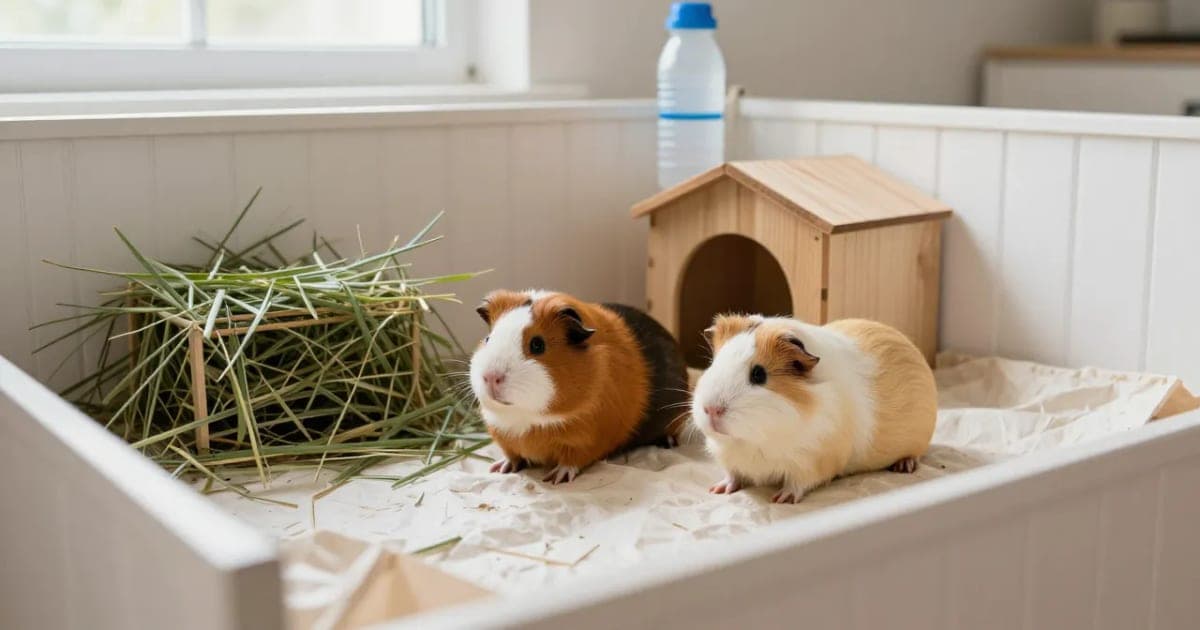
A guinea pig cage that smells sharp and stale, like ammonia, can be frustrating, especially when the smell comes back soon after a full clean. It also matters for your guinea pigs: the RSPCA in Australia describes them as very sensitive to the ammonia in urine.
In most cases, it's worth checking a handful of things in order: the size of the cage, the bedding, the cleaning routine and the airflow. This guide walks through each one, with what veterinary and animal welfare sources recommend, and explains when a strong smell is coming from the urine itself and needs a vet.
Quick answer: an ammonia smell usually means urine is building up faster than the cage is being cleaned or ventilated. Remove wet bedding and droppings every day, do a full clean at least weekly, use 2 to 3 inches of absorbent, unscented paper bedding (or fleece over an absorbent layer), make sure the cage is large and well ventilated (never a glass tank), and keep it away from heat. If the urine itself looks dark, gritty or bloody, or your guinea pig strains to pee, see a vet.
Where the ammonia smell comes from
The sharp smell tends to build up when urine is left to sit in bedding, especially in spots a guinea pig uses again and again, and when damp bedding and droppings stay in a warm, enclosed space. That's why veterinary advice keeps returning to three things: space, bedding and airflow.
Merck Veterinary Manual lists poor husbandry among the factors that predispose guinea pigs to bacterial pneumonia. A smelly cage doesn't prove a health risk on its own, but it is a sign that something in the setup needs to change, not something to cover up with a fragrance.
Find the cause: a quick checklist
Work down this table. Most smelly cages have more than one of these at once.
| Possible cause | What you'll notice | What to change |
|---|---|---|
| Cage too small | Urine and droppings concentrated in small areas; bedding soaked quickly | Give more floor space (see the next section) |
| Wet "pee corners" left too long | Smell strongest in one or two corners | Remove wet bedding there every day |
| Bedding too thin or not absorbent | Floor feels damp under the bedding | Use 2 to 3 inches of absorbent, unscented bedding |
| Fleece liners not changed often enough | Fleece smells even after it looks clean | Change and wash liners more often; check the absorbent layer underneath |
| Full clean too infrequent | Smell returns a few days after cleaning | Full clean at least once a week |
| Poor airflow | Smell is trapped; solid sides or a glass tank | Use a well-ventilated enclosure with open or mesh sides or top |
| Wet hay or bedding | Damp or musty smell | Keep hay dry; remove damp hay; check for leaking water bottles |
| Cage in a warm spot | Cage near a heater or in direct sun | Move it out of direct sun and away from heaters |
| A change in the urine itself | Very strong smell, darker, gritty or bloody urine | See a vet (see the last section) |
Is the cage big enough?
Many smell problems start with space. Merck Veterinary Manual warns that many commercial guinea pig cages are too small, especially for more than one animal. In a small cage, urine and droppings are concentrated in less space, so bedding is likely to get soaked faster.
| Source | Floor space recommended |
|---|---|
| Humane World for Animals | 7.5 sq ft (about 30 × 36 in) as the bare minimum for one; at least 10.5 sq ft (30 × 50 in) preferred for two |
| Merck Veterinary Manual | A minimum of 7.5 sq ft for one guinea pig, plus 2 to 4 sq ft for each additional one |
| PDSA (UK) | A hutch of at least 1.5 × 1 m, with a 2 × 1 m run attached |
If your cage is below these figures, more space is likely to help with odor as much as any product.
Bedding that helps with odor — and what to avoid
Bedding is where the urine goes, so it does most of the work. Veterinary sources broadly agree on a few points:
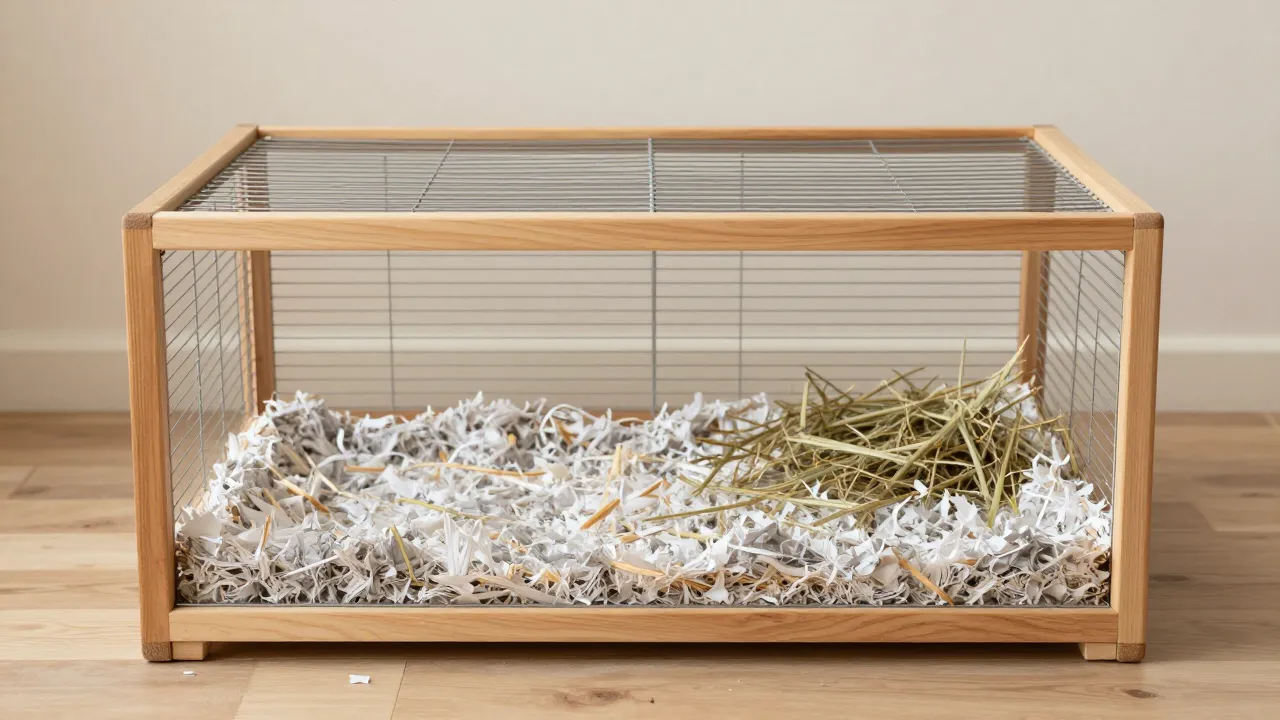
- Paper-based or fleece setups. Merck recommends recycled paper products, fleece or other material free of loose fibers, and NC State's veterinary hospital recommends unscented, dye-free paper bedding.
- Enough depth. Humane World for Animals advises 2 to 3 inches of bedding so absorption is maximized.
- No cedar or raw pine. Merck advises avoiding cedar and raw pine because they contain oils that can irritate the lungs. Purdue's veterinary hospital points out that the aromatic oils that cover up odors are the same ones that cause the problems.
- No sawdust or cat litter. Merck lists both among materials to avoid.
- Straw isn't a urine solution. Purdue notes that straw doesn't absorb urine.
Sources don't all agree on wood shavings. Merck advises against wood shavings, while PDSA and the RSPCA in the UK accept clean, dust-extracted shavings but not softwoods such as pine. If odor is your main problem, unscented paper bedding is the option Merck and NC State both recommend.
Fleece is reusable and lower-waste, but it works with an absorbent layer underneath and needs frequent washing; Mid-Atlantic Guinea Pig Rescue notes that fleece can become smelly. For a material-by-material comparison, including hemp and aspen, see our eco-friendly small-pet bedding comparison.
A cleaning routine that keeps up
Organizations recommend slightly different schedules, so treat these as minimums rather than a fixed rule.
- The RSPCA in the UK recommends spot cleaning every day and a deep clean at least once a week.
- PDSA advises removing wet or dirty bedding and cleaning the hutch more thoroughly once a week.
- The University of Florida's veterinary hospital says soiled bedding should be changed every other day.
- The RSPCA in Australia says enclosures should be cleaned at least two to three times a week.
In practice, if your cage smells, a routine like this covers all of them:
- Every day: remove droppings, wet bedding and leftover fresh food; replace bedding in the pee corners; check that hay is dry.
- Every week (more often if the smell returns sooner): remove all bedding, clean the base, rinse and let it dry completely before adding fresh bedding.
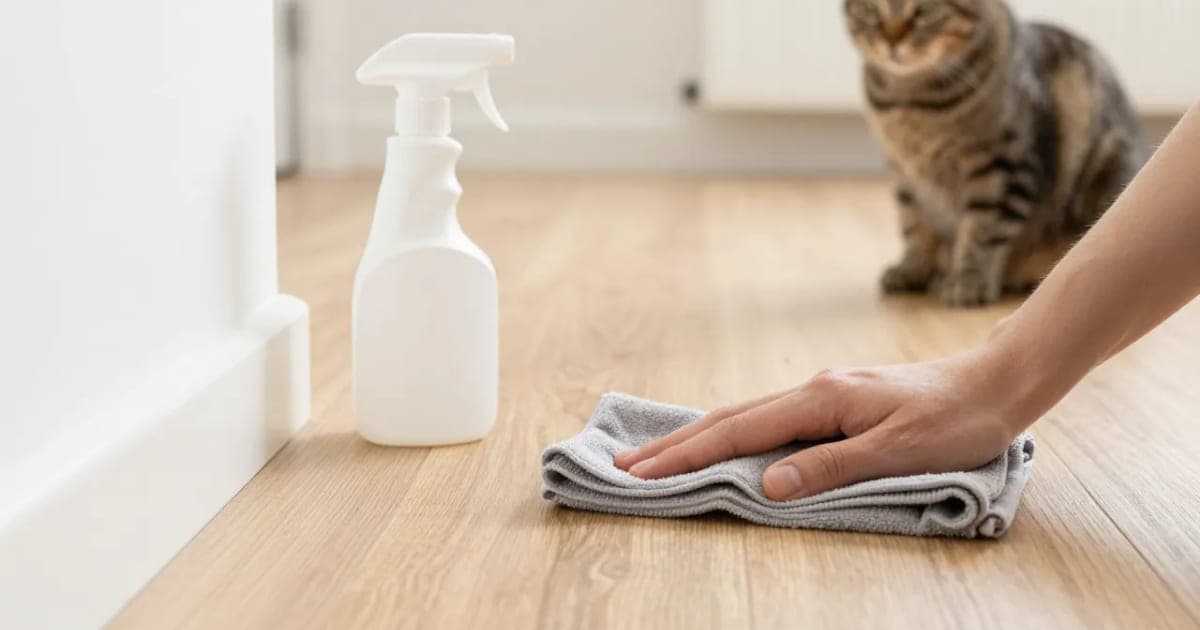
For the weekly clean, PDSA recommends scrubbing with a pet-safe cleaner and only letting your guinea pigs back in once the enclosure is completely dry. The University of Florida suggests a solution of half water, half vinegar, rinsed well and dried before adding fresh bedding. Avoid scented sprays and deodorizers: they mask the smell rather than remove its source. Purdue also warns against the odor-control chemicals in most cat litters.
Airflow and placement
A cage can be clean and still smell if the air around it doesn't move.
- No glass tanks. Humane World for Animals says glass aquariums are not acceptable for guinea pigs, and Purdue explains that they make ammonia levels build up quickly.
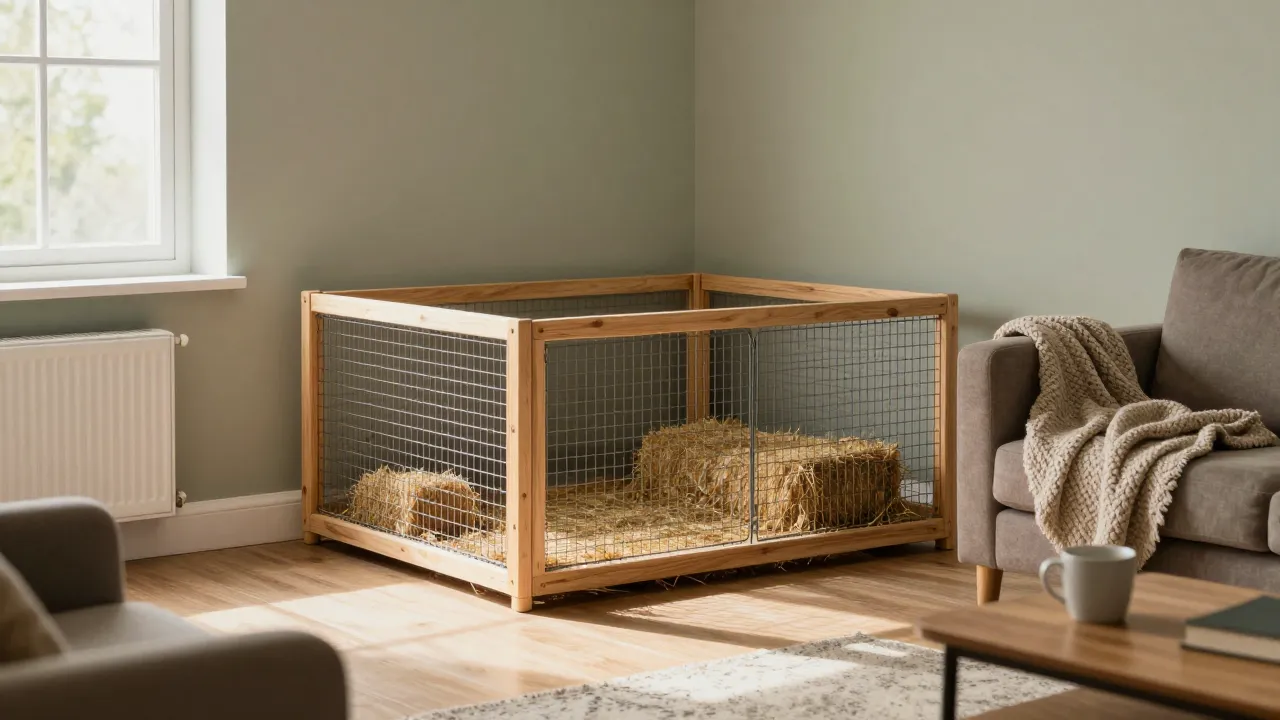
- Good ventilation. Merck advises good airflow and a wire mesh top if the sides are solid.
- The right temperature. Merck recommends a spot at 65 to 75°F, out of direct sunlight and drafts; the RSPCA in the UK warns that temperatures above 26°C (about 79°F) can cause heatstroke.
- Dry surroundings. Humane World for Animals notes that dampness promotes mold in hay and bedding.
Where the enclosure sits in your home matters as much as the enclosure itself. Our small-pet enclosure placement checklist goes through each room, heat source and draft to avoid.
When the smell is the urine itself: signs to see a vet
Sometimes a clean, well-ventilated cage still smells because the urine has changed. Guinea pigs are prone to urinary problems: Merck describes bladder stones made mostly of calcium carbonate, often first noticed as blood in the urine, and a 2023 study of guinea pigs with urinary disease found that stones were the most common diagnosis.
VCA Animal Hospitals describes bladder sludge, a buildup of calcium in the urine, as giving urine a very strong smell, a darker color and a sandy appearance, and says a vet visit is necessary. Contact your veterinarian if you notice:
- urine that smells much stronger than usual, looks darker, gritty or chalky, or has blood in it;
- straining, squeaking or crying while peeing;
- breathing changes: VCA says open-mouth breathing needs immediate evaluation by a vet, and the University of Missouri lists sneezing and nasal discharge among the signs of a respiratory infection.
Diet plays a part in urinary health. NC State notes that alfalfa hay contains too much calcium and protein for adult guinea pigs, and Merck recommends a base of high-quality grass hay. Merck also lists increasing water intake and fresh produce among the ways to help prevent stones. Don't change a guinea pig's diet sharply without talking to your vet, especially if they already have urinary signs.
FAQ
Why does my guinea pig cage smell even after cleaning?
Usually because the bedding isn't absorbent or deep enough, pee corners aren't being refreshed daily, the cage is small, or air doesn't circulate well. If none of those apply and the urine itself smells unusually strong, ask your vet.
How often should I clean a guinea pig cage?
Spot clean every day and do a full clean at least once a week, as the RSPCA in the UK recommends. Other organizations suggest changing soiled bedding every other day or cleaning two to three times a week, so clean more often if it still smells.
What bedding is best for guinea pig odor?
Unscented paper bedding, 2 to 3 inches deep, is the option Merck and NC State recommend. Fleece works if it has an absorbent layer underneath and is washed often. Avoid cedar, raw pine, sawdust and cat litter.
Is the ammonia smell harmful to guinea pigs?
The RSPCA in Australia describes guinea pigs as very sensitive to the ammonia in urine. Separately, Merck lists poor husbandry among the factors that predispose them to pneumonia. Either way, a strong smell is a reason to improve cleaning and ventilation.
Can I use air fresheners or scented bedding to hide the smell?
It's better not to. Scented products mask the smell without removing urine, and aromatic woods such as cedar contain oils that can irritate guinea pigs' lungs.
When does a smelly cage mean a health problem?
When the urine itself changes: a much stronger smell, dark, gritty or bloody urine, or straining to pee. These can be signs of bladder sludge or stones and need a vet.
Related reading: paper, hemp and aspen bedding compared, the compostable small-pet litter guide, our small-pet enclosure placement checklist and can rabbits and guinea pigs live together?.
For more small-pet care guides, see our Small Pets Care hub.