Litter Box Setup for Multiple Cats: How Many Boxes and Where
One box per cat plus one, spread out, never side by side: how to set up litter boxes in a multi-cat home, from box size to litter and daily cleaning.
Last updated October 18, 2026. Reviewed and fact-checked by the Practical Eco Pet team.
On this page
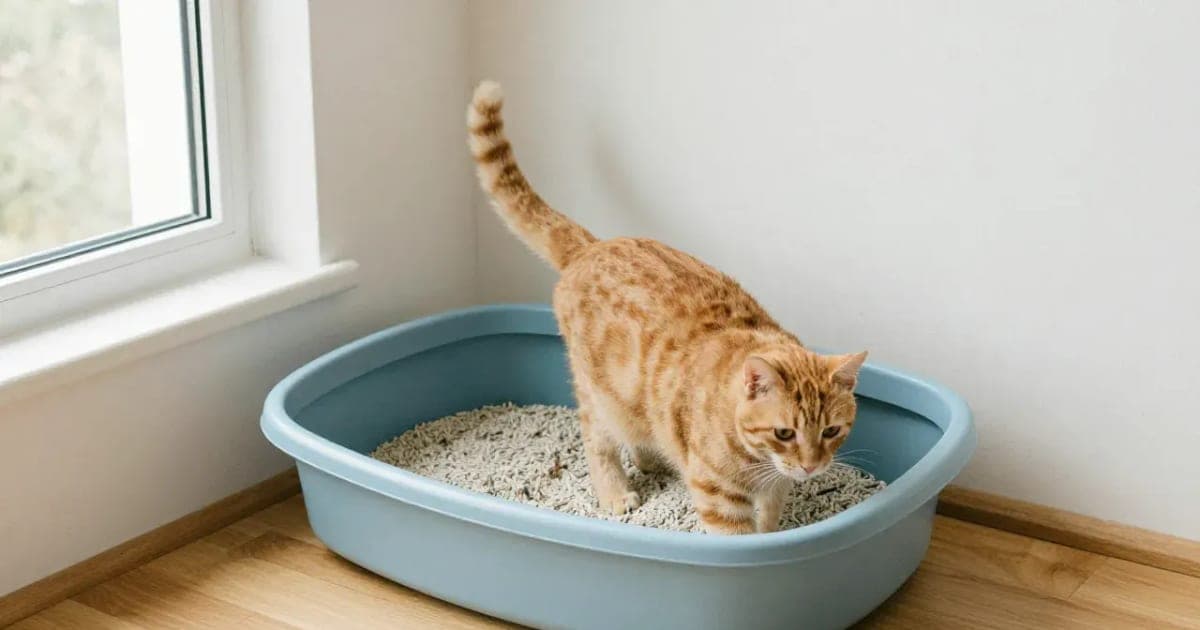
When two or more cats share a home, the litter box setup that worked for one cat often stops working. Boxes fill faster, one cat may start guarding them, and a shyer cat may quietly look for somewhere else to go. Most multi-cat litter problems start here, and most can be prevented with a few simple rules.
This guide covers how many boxes you need, where to put them, which boxes and litters cats tend to prefer, and how to keep everything clean without wasting litter or relying on fragrance.
Quick answer: provide one litter box per cat, plus one, and spread them out in different rooms rather than lining them up. Choose large, uncovered boxes with a low entry, fill them with 1 to 2 inches of unscented clumping litter, scoop every box daily, and place each one in a quiet spot with more than one way out.
How many litter boxes for multiple cats?
Cornell's Feline Health Center recommends as many boxes as there are cats, plus one. The ASPCA gives the same rule.
| Number of cats | Minimum boxes | Separate locations |
|---|---|---|
| 1 | 2 | 2 |
| 2 | 3 | 2 to 3 |
| 3 | 4 | 3 to 4 |
| 4 | 5 | 4 to 5 |
The "plus one" matters because cats don't always want to use a box another cat has just used, and because one busy or soiled box shouldn't leave a cat with nowhere to go.
Why boxes side by side count as one
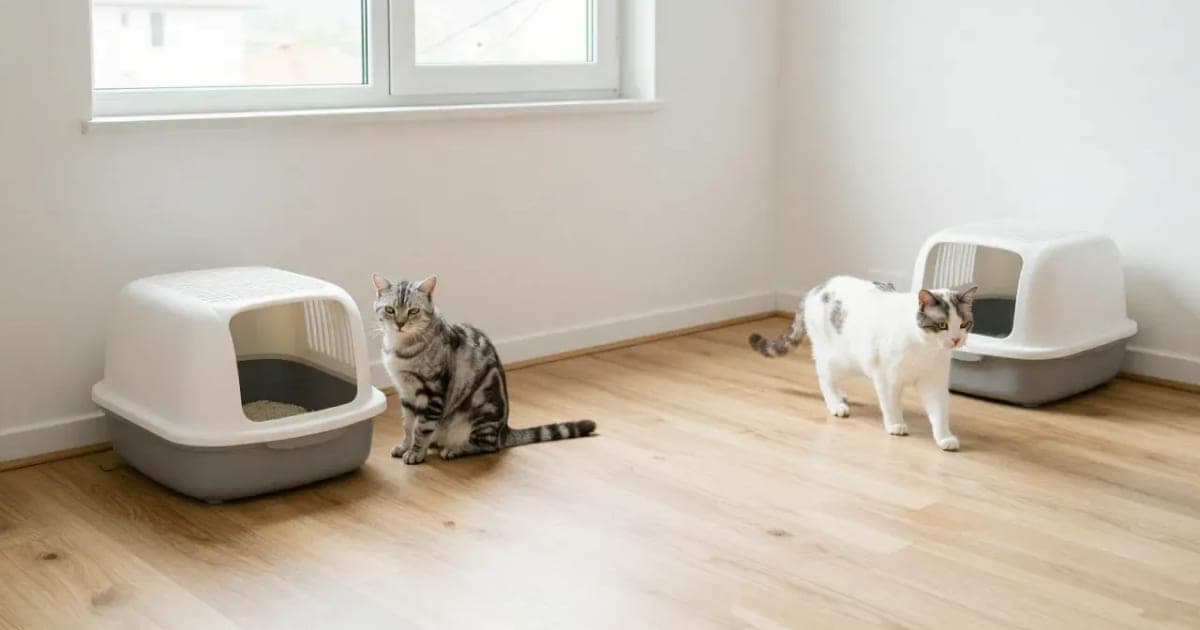
Three boxes lined up in the laundry room look like three options to us. To a cat, they can look like one large toilet in one place. If one cat sits in the doorway, it controls access to all of them. Cornell advises placing multiple boxes in different areas, and notes that in multi-cat homes cats may need separate boxes, feeding areas and multiple exits, since a box surrounded on three sides can invite ambush.
The goal is simple: no single cat should be able to watch or block every box from one spot.
Where to put litter boxes in a multi-cat home
Good locations share a few traits. The ASPCA recommends a quiet, low-traffic area that isn't a dead end, where the cat can see who's approaching and has more than one escape route.
- One box on every floor of a multistory home.
- Away from loud appliances such as washers, dryers and furnaces.
- Away from food and water. Cornell recommends keeping boxes away from feeding areas.
- Accessible day and night. A box behind a door that sometimes closes doesn't count.
- Not in view of outdoor cats. A window where neighborhood cats appear can make the spot feel unsafe.
- Where the stressed cat spends time. If your cats don't get along, the ASPCA suggests adding boxes in the areas the stressed cat uses most.
In a small apartment, spreading boxes out takes some creativity. Our guide on where to put a litter box in a studio apartment covers the spots that work best in tight spaces.
Choosing the right box
Size
Bigger is usually better. A study on litterbox size preference in domestic cats by Guy, Hopson and Vanderstichel found that cats preferred larger boxes. Many standard boxes are small for an adult cat. The ASPCA suggests a plastic storage container as an alternative. A sturdy bin you wash and reuse for years is also a lower-waste choice than disposable trays.
Covered or uncovered?
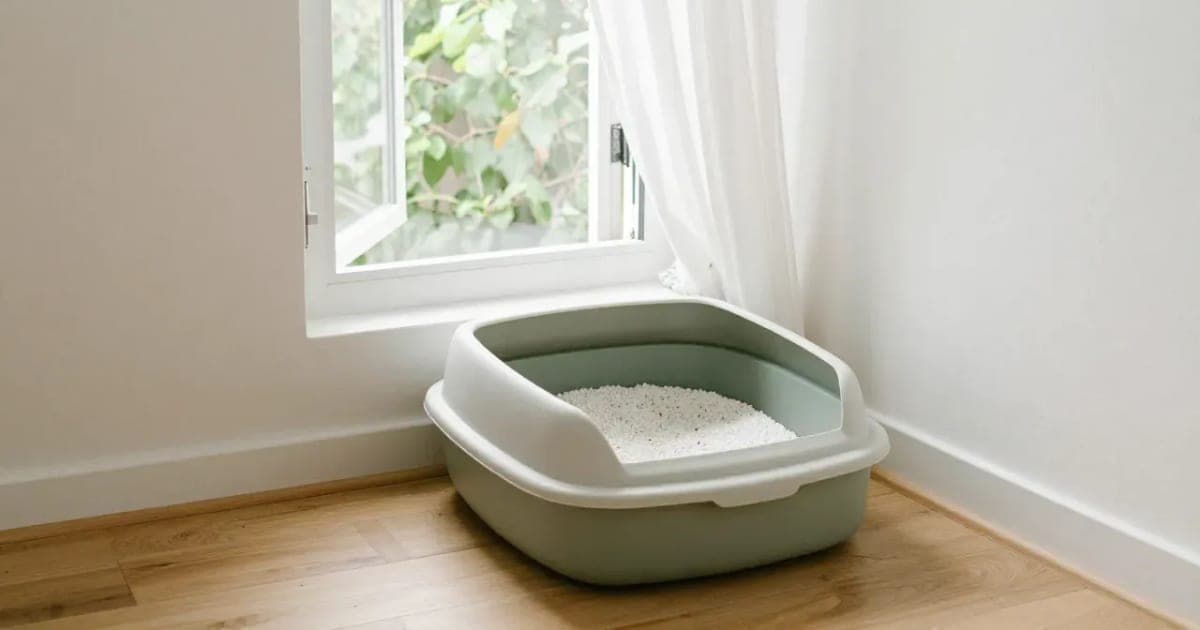
Cornell notes that most cats prefer uncovered boxes that allow a 360-degree view. In a multi-cat home, a lid has another drawback: the cat inside can't see another cat waiting at the entrance. A review from the American Veterinary Society of Animal Behavior adds that common covered boxes tend to be small and may be scooped less often. If you like covered boxes, offer at least some open ones and watch which your cats use.
Entry height
Kittens, older cats and cats with stiff joints need low sides. Cornell recommends low-sided boxes for these cats.
Liners and self-cleaning boxes
Many cats dislike liners, and the ASPCA recommends removing them. Self-cleaning boxes suit some cats, but switch back to a traditional box if a cat starts eliminating elsewhere.
Choosing the litter
Cornell reports that most cats prefer unscented, finer-textured litter, about 1 to 2 inches deep. The ASPCA also recommends keeping litter shallow rather than 3 to 4 inches deep.
If you want a lower-waste litter (pine, corn, wheat, walnut or paper), make the switch gradually: mix the new litter into the old, or offer it in one extra box and let your cats choose. Compare options in our eco-friendly cat litter comparison, and if dust is a concern, see low-dust cat litter for cats with asthma or allergies.
Cleaning routine for several boxes
| Task | How often | Notes |
|---|---|---|
| Scoop every box | At least once a day | More often with more cats |
| Top up litter | As needed | Keep about 1 to 2 inches |
| Wash the box | Weekly to every few weeks | Mild, unscented soap; dry fully |
| Replace the box | When scratched, cracked or smelly | Scratches hold odor |
Cornell advises changing litter often enough that it stays dry and smells clean, and more often in homes with more cats. Avoid scented cleaners: the ASPCA notes they can put cats off the box. For disposal, see how to dispose of cat litter the eco-friendly way.
How to move or add a box without upsetting your cats
Cats are creatures of habit, so changes to the setup work best in small steps.
- Add before you remove. Put the new box in its new spot first, and keep the old one until your cats are clearly using the new one.
- Move boxes gradually. If a box has to change rooms, shift it a short distance each day rather than all at once.
- Copy what works. Fill a new box with the same litter your cats already use, and switch litter types later if you want to.
- Watch, then adjust. Note which boxes get used and which are ignored. An ignored box usually has a problem: a noisy spot, a closed door at night, a cat guarding the approach. Fix that rather than removing the box.
Beyond the boxes: the rest of the setup
Litter problems in multi-cat homes are rarely only about boxes. The ASPCA recommends giving each cat its own resting spots (shelves, window sills, cat trees) and spreading out food, water, scratching posts and boxes so cats don't have to meet while using them. Vertical space helps cats pass each other without a confrontation; a sturdy eco-friendly cat tree is a good place to start.
The AAFP's Intercat Tension Guidelines note that tension between cats is common but often unrecognized, and can occur even in two-cat homes, most often after a new cat arrives.
Setup checklist
- One box per cat, plus one
- Boxes in different rooms, never side by side
- At least one box on every floor
- Each box in a quiet spot with two ways out
- Boxes away from food, water and loud appliances
- At least some large, uncovered boxes with low entry
- Unscented, fine-textured litter about 1 to 2 inches deep
- Every box scooped daily
If cats are already peeing outside the box
A better setup prevents most problems, but if a cat is already peeing elsewhere, rule out a medical cause first. See how to stop cats from peeing in the house for the full list of causes, and clean every spot with an enzymatic cleaner (our carpet urine guide explains how).
For a step-by-step plan, The Multi-Cat Litter Box Fix includes a placement checklist and a printable 30-day plan: get the guide.
FAQ
How many litter boxes do I need for 2 cats? Three: one per cat, plus one. Place them in at least two different spots.
Can two cats share one litter box? Some do, but it's a common cause of problems. One box fills quickly, and one cat may block the other. The one-per-cat-plus-one rule is safer.
Is it okay to put all the litter boxes in one room? It's better not to. Boxes grouped together can be guarded by one cat. Spread them out so each cat always has a choice.
Do cats prefer covered or uncovered litter boxes? Cornell notes that most cats prefer uncovered boxes. Studies show individual preferences vary, so offer at least one open box and watch what your cats use.
How big should a litter box be? Bigger than most standard boxes. Cats in one study preferred larger boxes, and a large storage bin with a low entry cut in it is a common, durable option.
How often should I scoop with multiple cats? At least once a day for every box, and more often if boxes fill up quickly.
Related reading: how to stop cats from peeing in the house, how to stop cats from spraying, where to put a litter box in a studio apartment and reducing litter box smell without fragrance.
Part of our Eco-Friendly Cat Care guide — the complete Practical Eco Pet hub for sustainable cat litter, feeding, and enrichment.