Cat Urine Smell Remover for Carpet: What Works and What to Avoid
How to remove cat urine smell from carpet for good: find hidden stains, use an enzymatic cleaner the right way, and avoid the products that bring cats back.
Last updated October 18, 2026. Reviewed and fact-checked by the Practical Eco Pet team.
On this page
Cat urine in carpet is stubborn. It soaks through the fibers into the backing and the pad, dries out of sight, and keeps smelling long after the stain has faded. Worse, a spot that still smells of urine can invite your cat back to the same place.
This guide covers what actually removes cat urine smell from carpet: how to find every spot, how to use an enzymatic cleaner properly, what to avoid, and what to do when cleaning isn't enough. It also includes lower-waste options, because getting rid of the smell shouldn't mean a cupboard full of single-use products.
Quick answer: find every spot with a UV blacklight, blot fresh urine (don't rub), rinse with cool water, then soak the area with an enzymatic cleaner made for pet urine, deep enough to reach where the urine went. Let it work, then dry slowly, and repeat if needed. Avoid ammonia-based cleaners and steam or heat, which can set the stain and the smell.
Why cat urine smell is so hard to remove
Two things make cat urine different from an ordinary spill. First, it travels down: carpet fibers, backing and pad all absorb it, so cleaning only the surface leaves most of it behind. Second, your cat's nose is far more sensitive than yours. Cornell's Feline Health Center explains that odors must be neutralized, not masked, because cats tend to re-soil areas that smell of their own urine.
That's why air fresheners and scented sprays don't solve the problem. They change what you smell, not what your cat smells.
What you'll need
| Item | Why | Lower-waste tip |
|---|---|---|
| UV blacklight torch | Finds dried stains you can't see | Reusable, battery or USB-rechargeable |
| Old towels or cloths | Blotting fresh urine | Washable instead of paper towels |
| Enzymatic pet urine cleaner | Breaks down urine instead of masking it | Concentrated or refillable formats |
| Wet/dry vacuum (optional) | Pulls liquid out of the carpet | Borrow or rent one |
| Laundry basket or cover | Keeps pets off while it dries | Anything you already own |
| Painter's tape | Marks every spot you find | Peels off without residue |
Step 1: Find every spot
Dried urine can be invisible but still smelly. Turn off the lights and scan the carpet with a UV blacklight; urine stains often show up as glowing patches. PetMD's veterinarian-reviewed guide suggests a blacklight for finding dried stains that keep attracting repeat accidents.
Check edges along walls, under furniture, behind doors and near the litter box. Mark each spot with painter's tape so none get missed.
Step 2: Blot fresh urine
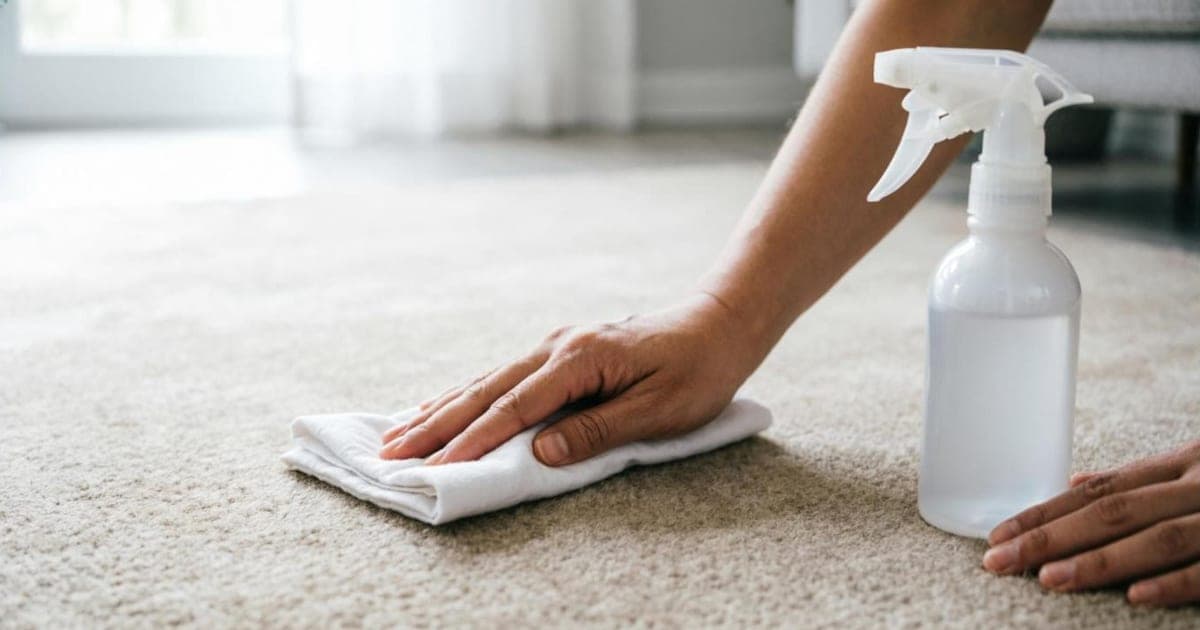
If the urine is fresh, press a clean, absorbent cloth onto it and keep pressing with dry sections until little more comes up. Don't rub: it spreads urine sideways and pushes it deeper. PetMD recommends blotting up as much as possible, then rinsing with clean water and removing the liquid, ideally with a wet/dry vacuum.
Step 3: Rinse with cool water
Pour a small amount of cool water on the spot and blot or vacuum it up again. This dilutes what's left. Use cool water, not hot: PetMD warns against steam cleaners on urine because heat can set the stain.
Step 4: Soak with an enzymatic cleaner
This is the step that matters most. The ASPCA recommends an enzymatic cleanser designed to neutralize pet odors.
- Use enough. If the urine reached the pad, the cleaner needs to reach it too. A light mist on the surface won't do it.
- Let it work. PetMD suggests letting the cleaner sit for 10 to 15 minutes before blotting; always follow the product label, since some need longer.
- Test first on a hidden corner, especially with wool or natural-fiber rugs.
- Don't mix products. Use the enzymatic cleaner on its own.
Step 5: Dry slowly and keep pets away
After blotting, cover the area loosely (an upturned laundry basket works) so your cats stay off while it dries. PetMD advises covering the area until it's fully dry. Thick carpet can take a day or two. Avoid hair dryers and heaters.
Step 6: Check again and repeat
Once it's dry, check with the blacklight and your nose. Older or heavy stains often need a second or third treatment, which PetMD also notes for strong stains.
What to avoid
- Ammonia-based cleaners. The ASPCA warns that urine contains ammonia, so these cleaners can attract a cat back to the same spot. PetMD adds that they can set stains.
- Vinegar near problem spots. Some guides suggest it, but Cornell advises avoiding products containing ammonia or vinegar where a cat has soiled, since they smell like urine to cats.
- Steam cleaners and heat. Heat can lock in the stain and odor.
- Fragrance as a fix. Scented sprays and powders hide the smell from you, not from your cat.
- Mixing cleaning products. Some combinations release harmful fumes. Our eco-friendly, pet-safe cleaning guide explains which products are safer around pets.
Hard floors, walls and baseboards
Sealed hard floors are easier: PetMD recommends spot-cleaning with water and a damp sponge, then using an enzymatic cleaner on dried patches, wiping clean and drying thoroughly. The risk is in the gaps. Urine can seep between floorboards, under laminate edges and into grout, so check those lines with the blacklight too.
Walls, door frames and baseboards are where sprayed urine usually lands. Clean them the same way: wipe, apply enzymatic cleaner, let it work, wipe and dry. Treat the floor directly below as well, since urine often runs down. If marks keep appearing on vertical surfaces, read how to stop cats from spraying.
Mattresses and soft furnishings
The same principle applies to mattresses and cushions: blot, soak with an enzymatic cleaner, let it work, then dry slowly. PetMD recommends drying a mattress with layers of towels replaced daily, and notes that several treatments may be needed. For washable fabrics, treat the spot before washing, then air-dry and check the smell: PetMD notes that dryer heat can lock in odor.
When cleaning isn't enough
If urine has soaked into the pad repeatedly over a long time, home cleaning may not fully remove it. Options include:
- Professional extraction with a cleaner experienced in pet urine (ask whether they treat the pad, not just the surface).
- Replacing the pad under the affected area, and treating the subfloor before it's covered again.
- Replacing a small rug that can't be saved.
Stop the cat from coming back
A clean carpet solves half the problem. Your cat peed there for a reason. The ASPCA suggests making the spot less appealing: place food bowls, beds or toys there, or cover it temporarily with foil or an upside-down carpet runner. If a box fits, putting a litter box on the spot for a while is another option.
Then deal with the cause:
- Rule out a medical problem with your vet.
- Check the litter box setup: litter box setup for multiple cats.
- If the urine is on walls or furniture, it may be marking: how to stop cats from spraying.
- For the full list of causes: how to stop cats from peeing in the house.
Print our free one-page Cat Pee Cleanup Checklist to keep the steps handy. If you have more than one cat, The Multi-Cat Litter Box Fix walks you through every cause with a 30-day plan: get the guide.
FAQ
What is the best cat urine smell remover for carpet? An enzymatic cleaner made for pet urine, used generously enough to reach the pad and left to work before blotting. The ASPCA recommends enzymatic cleansers for pet odors.
Does vinegar remove cat pee smell from carpet? Some guides suggest it, but Cornell advises avoiding vinegar and ammonia where a cat has soiled, because they can smell like urine to cats. An enzymatic cleaner is the safer choice.
Why does my carpet still smell like cat pee after cleaning? Usually because the urine reached the pad and the cleaner didn't. Treat again with more product, let it dry fully, and check with a blacklight.
Can I steam clean cat urine out of carpet? It's best not to. Heat can set the stain and the odor.
How do I find cat urine I can't see? Use a UV blacklight in a dark room. Dried urine often glows, which helps you find every spot.
Will my cat keep peeing in the same spot? It may if the smell remains or the cause isn't fixed. Clean thoroughly, make the spot less appealing, and address the reason the cat avoided the box.
Related reading: how to stop cats from peeing in the house, how to stop cats from spraying, reducing litter box smell without fragrance and our eco-friendly, pet-safe cleaning guide.
Part of our Eco-Friendly Cat Care guide — the complete Practical Eco Pet hub for sustainable cat litter, feeding, and enrichment.