Vinyl plank flooring is common in rentals, and on paper it's the easiest one to live with a cat on: no carpet pad to soak up urine, a surface that wipes clean, and a "waterproof" label on the box. In practice, cat urine on vinyl plank floors still causes two problems. The smell can come back even after the surface looks clean, and the wrong cleaner can damage the floor you'll be asked to hand back at move-out.
This guide explains how to clean cat urine from vinyl plank (LVP) using what a major flooring maker, COREtec, recommends (your own floor's care sheet always comes first), what to keep off the floor, how to tell when urine has gone under the planks, and what renters can do to protect their deposit.
Quick answer: blot up fresh urine right away, wipe the area with a damp cloth and a pH-neutral floor cleaner, and dry the seams. For old or hidden spots, find them with a UV blacklight and use an enzymatic pet-urine cleaner, wiping up the excess instead of flooding the joints. Skip vinegar, ammonia, bleach mixtures and steam mops (unless your floor's maker approves them).
If the smell keeps coming back, the urine has probably reached the edges or the underlayment. In a rental, tell your landlord early rather than lifting planks yourself.
Why vinyl plank is easier to clean — and where urine still hides
The top layer of vinyl plank doesn't absorb liquid the way carpet or unsealed wood does, so a fresh puddle cleaned up quickly usually leaves nothing behind.
The weak points are the gaps. Many vinyl plank floors are "floating", click-together floors, with seams between planks and an expansion gap around the edge of the room hidden under the baseboards. "Waterproof" refers to the planks, not to everything underneath them. A 2018 COREtec Plus warranty from Shaw is one example. It covered everyday spills only as long as the water didn't flow over the edge of the surface. It also warned that moisture building up in subfloors can lead to mold or mildew. Warranties differ from one floor to the next, so check the one for your floor, but the risk is the same: urine that runs to a wall, a doorway or an open seam can end up where you can't wipe it.
Cats make this more likely than a spilled glass of water. Cats that spray usually mark vertical surfaces, as Cornell's Feline Health Center describes, so urine on a wall or door frame runs down to exactly where the floor meets the baseboard. And a cat that has been going in the same spot for a while may have left several dried layers before anyone noticed.
How to clean a fresh accident
Clean it as soon as you find it. The same COREtec Plus warranty asks owners to start cleaning pet stains as soon as they are found, noting that the longer a stain sits, the harder it is to remove, and COREtec's care guide also advises removing wet spills as soon as possible.
- Blot, don't spread. Press paper towels or an old cloth onto the puddle until it stops picking up liquid. Wiping in wide strokes pushes urine toward the seams.
- Check the edges. Look along the nearest seams and the baseboard. If urine ran into a gap, blot along it too.
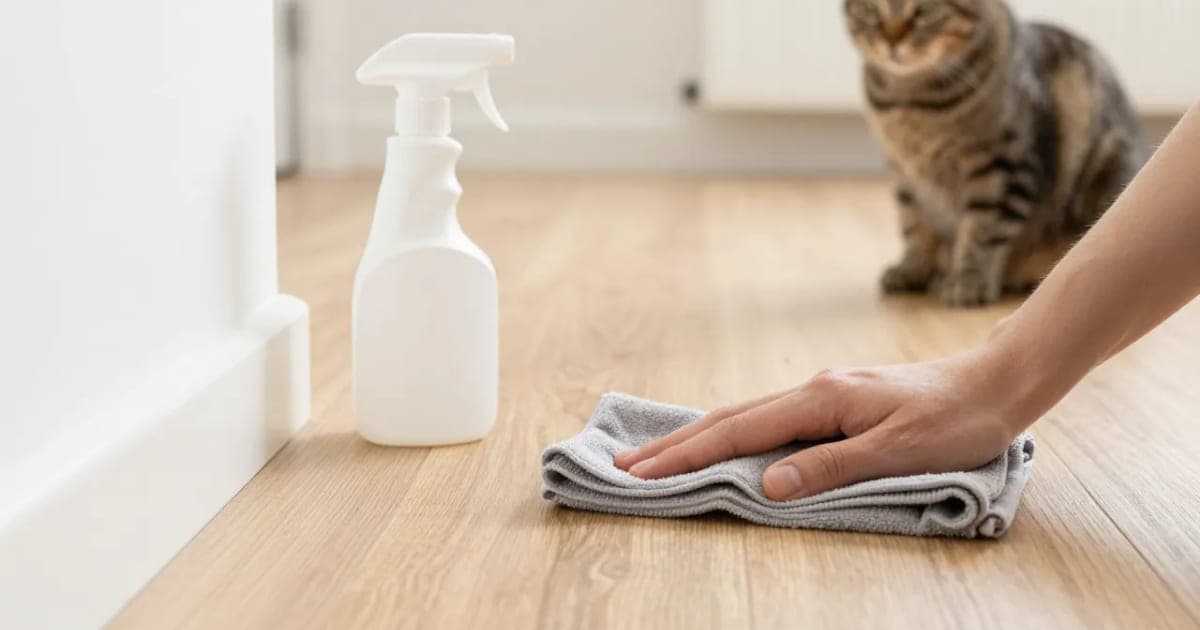
- Wipe with a damp cloth and a pH-neutral cleaner. COREtec's guide to cleaning LVP flooring recommends a cleaner that is pH-neutral, "neither acidic nor alkaline". Use a damp cloth, not a wet one.
- Dry the area. Finish with a dry cloth so no liquid is left sitting in the joints.
- Keep your cat off until it's dry, and think about why it happened (see the last section).
For a single fresh accident on a well-installed floor, that's often all it takes.
How to deal with old or hidden spots
Dried urine can be invisible but still smell. Cornell's Feline Health Center advises neutralizing the odor of soiled areas rather than just masking it, and avoiding cleaners that contain ammonia or vinegar, which smell like urine to cats.
Find every spot. In a dark room, scan the floor with a UV blacklight; PetMD suggests one for finding dried stains. Pay attention to seams, the base of walls and door frames, corners and the area around the litter box. Mark each spot with painter's tape.
Use an enzymatic cleaner made for pet urine. The ASPCA recommends an enzymatic cleanser designed to neutralize pet odors. On vinyl plank, adapt how you apply it:
- Test first on a hidden spot, such as inside a closet, to check for any change in the finish.
- Apply it to the spot, not the whole area. Spray or dab it on the stain and along the affected seam, enough to wet it, without leaving puddles.
- Give it time to work. Follow the label; enzymatic products need contact time to break down urine.
- Wipe up the excess and dry the area, so you don't leave liquid standing on the joints.
- Check again once it's dry with the blacklight and your nose, and repeat if needed. Older spots often take more than one round.
If a spot on a wall or door frame is the source, clean that surface too, from the top of the mark down to the floor.
What not to use on vinyl plank
Online advice about cat urine on vinyl often suggests vinegar, steam or "whatever works on tile". Some of that can damage the floor, and some of it can make your cat more likely to come back.
| Product or method | On vinyl plank? | Why |
|---|---|---|
| pH-neutral floor cleaner | Yes | What COREtec recommends for routine cleaning of LVP |
| Enzymatic pet-urine cleaner | Yes, test first | Breaks down urine odor; the ASPCA recommends enzymatic cleansers |
| Vinegar | Avoid | COREtec says it is slightly acidic and can harm LVP; Cornell advises against vinegar where a cat has soiled |
| Steam mop | Avoid unless your floor's maker approves it | COREtec advises against steam mops on luxury vinyl unless the manufacturer's guidelines allow them |
| Ammonia-based cleaners | Avoid | The ASPCA advises against them for accidents; Cornell notes ammonia smells like urine to cats |
| Bleach mixed with ammonia, vinegar or other cleaners | Never | Bleach mixed with ammonia or acids releases toxic gases, Transport Canada's CANUTEC warns |
| Detergent, wax, citrus or floor polish | Avoid | COREtec lists these among products to avoid on LVP |
| Soaking or a dripping mop | Avoid | COREtec advises removing wet spills as soon as possible; liquid left on the floor can reach the seams |
| Scented sprays and air fresheners | Don't rely on them | Cornell advises neutralizing odor, not masking it |
Your floor may come with its own care sheet. If it says something different from this table, follow your floor's instructions: they also decide what the warranty covers. And if you've already tried vinegar or an ammonia cleaner, don't follow it with bleach.
When the smell keeps coming back
If the smell comes back after you've cleaned the surface properly, the urine is probably somewhere you can't reach with a cloth. Signs to look for:
- the smell is strongest along one seam, at a doorway or at the base of a wall;
- the blacklight shows a glow that runs into the gap between planks or under the baseboard;
- the plank edges in that area look raised or discolored, or the floor feels soft (a sign of moisture underneath);
- your cat keeps returning to the same spot even after cleaning.
At that point, the repair may mean lifting the baseboard or some planks to clean or replace the underlayment and treat the subfloor, which is a job for the floor's owner or a flooring installer.
If you rent, don't do this yourself without asking. Lifting the floor in a rental without permission can turn a cleaning problem into a damage claim. Tell your landlord or property manager what happened, what you've already done and where the smell is; it's easier to agree on a repair early than to argue about it at move-out.
If you rent: protecting your deposit
Rules on security deposits vary by state, province and country, so check your lease and your local tenant rules. As one official example, Massachusetts lets landlords deduct a reasonable amount to repair damage caused by a tenant's pets, but not for normal wear and tear, and landlords there who take a security deposit must give tenants a statement of condition at move-in.
Whatever the local rules, a few habits help:
- Keep your move-in record. Photos or a condition report can help show what damage was already there when you moved in.
- Clean accidents the same day, using products the floor's maker allows.
- Write it down. Note the date, the spot and what you used. A short record can help show you dealt with it promptly.
- Report persistent smells early, in writing, rather than hoping they fade.
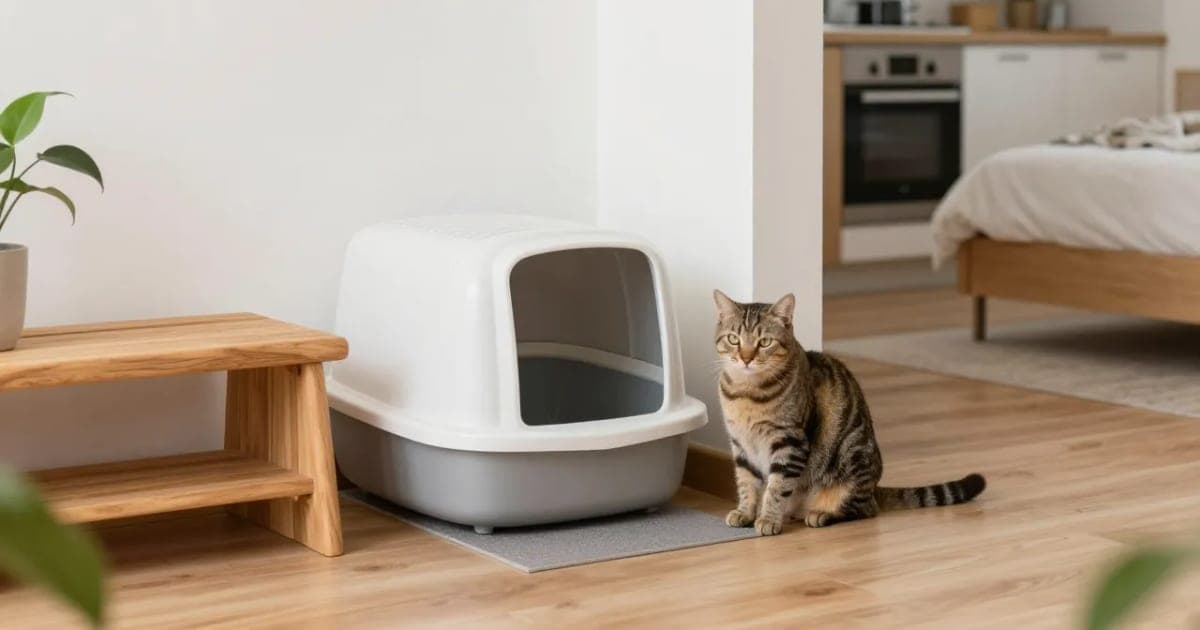
- Protect the high-risk spots. A washable mat around the litter box and under food bowls catches what misses the box; our guide to reducing litter tracking in a small apartment covers mats and box placement.
- Before moving out, check the whole floor with a blacklight so nothing is discovered for the first time at inspection.
Stop it from happening again
Cleaning fixes the floor, not the reason your cat went there. Cornell advises taking a cat that soils the house to a veterinarian for a thorough exam, because cats with medical problems may not appear sick. A cat that strains in the box and passes little or no urine, especially a male, needs a vet immediately: Cornell calls a urethral obstruction an absolute emergency.
After that, look at the setup:
- the full list of common causes is in how to stop cats from peeing in the house;
- marks on walls and door frames may be spraying, which needs a different approach: how to stop cats from spraying;
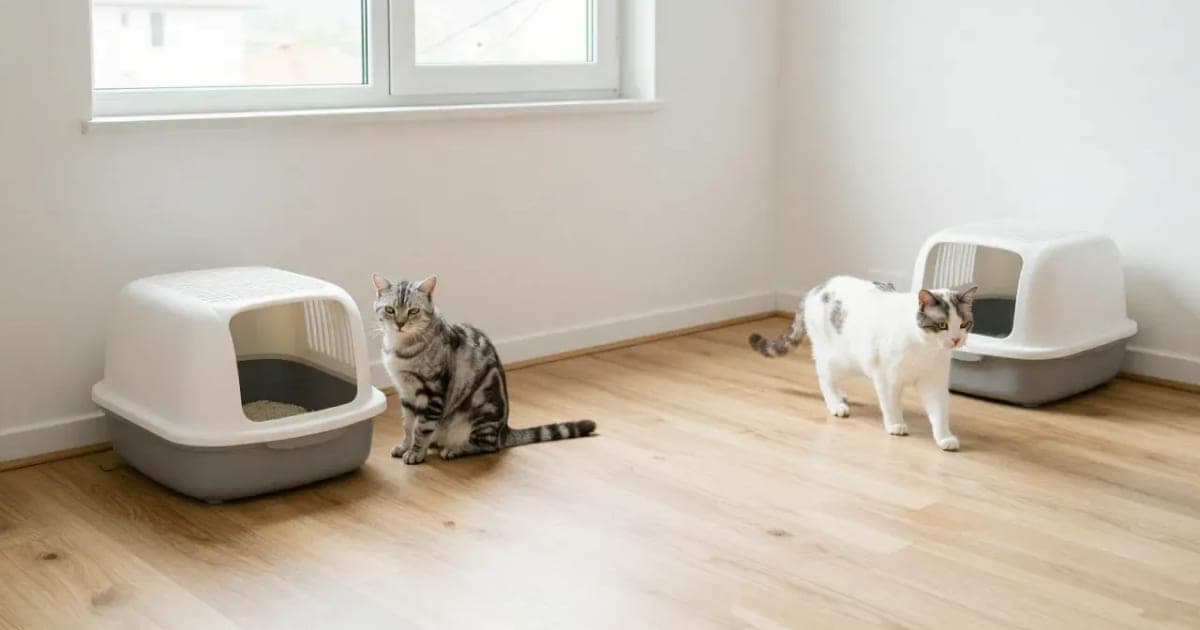
- with more than one cat, see our multi-cat litter box setup guide;
- in a small space, placement matters: where to put a litter box in a studio apartment.
FAQ
Can I use vinegar to clean cat pee off vinyl plank flooring?
It's better not to. COREtec says vinegar is slightly acidic and can harm LVP, and Cornell advises avoiding vinegar where a cat has soiled because it can smell like urine to cats. Use a pH-neutral cleaner, then an enzymatic cleaner for odor.
Can I steam mop vinyl plank after a cat accident?
Only if your floor's manufacturer approves it. COREtec advises against steam mops on luxury vinyl unless the maker's guidelines allow them.
Does cat urine damage vinyl plank flooring?
The plank surface is designed to resist liquid on top (the COREtec Plus warranty, for example, covers topical moisture), especially if it's cleaned promptly. The risk is urine that sits for a long time or reaches the seams, edges and underlayment, where it can cause lasting odor and moisture problems.
Why does my vinyl floor still smell like cat pee after cleaning?
Usually because urine got into a seam, under the baseboard or into the underlayment. Check with a blacklight, treat the seam with an enzymatic cleaner, and if the smell persists, the floor may need to be lifted in that area.
What cleaner is safe for cat urine on vinyl plank?
A pH-neutral floor cleaner for the surface and an enzymatic pet-urine cleaner for odor, tested on a hidden spot first. Check your floor's care instructions, which take priority.
Can my landlord charge me for cat urine damage on the floor?
It depends on your lease and where you live. Massachusetts, for example, allows deductions for damage caused by a tenant's pets but not for normal wear and tear. Check your lease and local tenant rules, and keep a record of how you cleaned.
Related reading: cat urine smell in carpet, reducing litter box smell without fragrance, our eco-friendly, pet-safe cleaning guide, and the complete guide to living with a cat in a small apartment.
Part of our Eco-Friendly Cat Care guide — the complete Practical Eco Pet hub for sustainable cat litter, feeding, and enrichment.