Can Rabbits and Guinea Pigs Live Together? What Veterinary Sources Say
Rabbits can carry a bacterium that's dangerous to guinea pigs, according to two independent veterinary sources — but neither says much about separate rooms or supervised contact. Here's what's actually documented.
Last updated October 8, 2026. Reviewed and fact-checked by the Practical Eco Pet team.

On this page
Rabbits and guinea pigs are often grouped together as "small pets" and sold in the same section of a pet store, which can make a shared enclosure seem like a natural setup. Two independent veterinary sources address this specifically. This guide covers exactly what those sources say, and is equally clear about what they don't.
The short answer: do not share a hutch
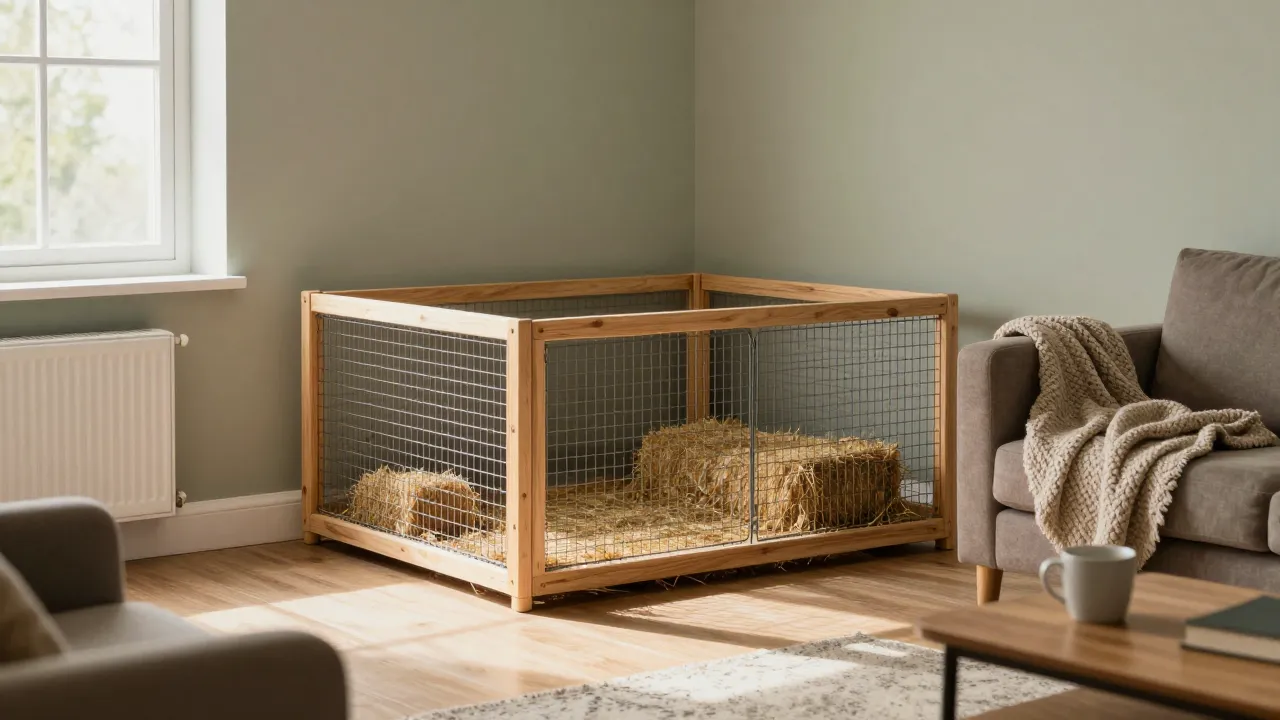
Purdue University's veterinary hospital care sheet states plainly: "Never house Guinea pigs and rabbits in the same hutch" (Purdue University College of Veterinary Medicine). The Merck Veterinary Manual reaches a similar conclusion in its own words: "rabbits and guinea pigs should not be housed together" (Merck Veterinary Manual — Bacterial and Mycotic Diseases of Rabbits). Purdue's instruction is specific to a shared hutch. Merck's wording is broader — "housed together" — without the source defining exactly which living arrangements that phrase is meant to cover.
Why veterinary sources raise a health concern
What Merck says about rabbit carriage
The reason both sources give is a specific organism: Bordetella bronchiseptica. Merck's rabbit disease reference states that "rabbits commonly harbor Bordetella bronchiseptica in their upper respiratory tract" (Merck Veterinary Manual — Bacterial and Mycotic Diseases of Rabbits) — "commonly," not universally; the source doesn't say every rabbit carries it. Merck identifies B. bronchiseptica as a bacterial cause of bronchopneumonia in guinea pigs (Merck Veterinary Manual — Infectious Diseases of Guinea Pigs). Purdue's page calls it "a virus called bordetella" (Purdue University College of Veterinary Medicine); this guide follows Merck's classification while preserving Purdue's separate housing instruction.
Why guinea pigs are vulnerable
Merck's guinea pig disease reference describes B. bronchiseptica as "a cause of bronchopneumonia that often leads to consolidation of lung lobes and fibrinosuppurative pleuritis" (Merck Veterinary Manual — Infectious Diseases of Guinea Pigs). Merck says the organism can be passed from clinically normal dogs and rabbits that serve as carriers (Merck Veterinary Manual — Infectious Diseases of Guinea Pigs). Merck separately notes that guinea pigs "are very susceptible to" the severe pneumonia this organism causes (Merck Veterinary Manual — Bacterial and Mycotic Diseases of Rabbits).
What the sources do not answer
Purdue's hutch-sharing instruction and Merck's broader "housed together" wording are the housing guidance available from these sources. Beyond that, the veterinary pages reviewed here do not specify several related scenarios — and that silence should not be read as either a safety signal or a warning.
Separate enclosures in the same room
The veterinary pages reviewed here do not specify whether keeping a rabbit and a guinea pig in separate enclosures within the same room carries the same concern as a shared hutch, a different level of concern, or no concern at all.
Separate rooms in one household
The veterinary pages reviewed here do not specify whether housing a rabbit and a guinea pig in separate rooms of the same home changes the picture described above.
Brief or supervised contact
The veterinary pages reviewed here do not specify whether brief or supervised contact between the two species is treated differently from full-time shared housing.
Other household animals
Dogs
Purdue's care sheet adds one further instruction in the same sentence as the hutch guidance: "limit dog/guinea pig interactions" (Purdue University College of Veterinary Medicine). The source doesn't specify what counts as an interaction worth limiting — physical contact, the same room, or something else — so we're passing along exactly what it says rather than filling in the detail ourselves.
Cats
The University of Missouri College of Veterinary Medicine's guinea pig disease reference lists the species that can carry Bordetella bronchiseptica: "rats, rabbits, dogs, cats, swine, and primates" (University of Missouri College of Veterinary Medicine). That's a carrier-status list, not a housing or contact recommendation. This source gives no housing or contact guidance for pet cats and guinea pigs, so we can't extend Purdue's dog-specific advice to cats.
Different needs beyond disease
Housing aside, rabbits and guinea pigs have some documented differences worth knowing if you're weighing whether to keep both.
Guinea pigs as social animals
Merck describes guinea pigs as "usually gentle, social" animals that "like living in small groups" (Merck Veterinary Manual — Anatomy, Physiology, and Behavior of Guinea Pigs). This describes guinea pig social behavior on its own terms — it isn't a source for whether a rabbit can serve as that companionship, and nothing here suggests one species can substitute for the other's social needs.
Species-specific nutrition and guinea pig vitamin C
The two species also eat differently. Merck's nutrition reference notes that guinea pigs "cannot produce their own vitamin C" and need commercial pellets formulated for that, while rabbits are generally maintained on rabbit-specific pellets, hay, and vegetables (Merck Veterinary Manual — Nutrition in Rodents and Lagomorphs). A shared enclosure would also mean managing two different diets in the same space, a separate practical consideration from the health risk covered above.
FAQ
Can rabbits and guinea pigs share a hutch? No — Purdue and Merck both advise against it, specifically because of the Bordetella bronchiseptica risk to guinea pigs (Purdue University College of Veterinary Medicine; Merck Veterinary Manual).
Is Bordetella bronchiseptica a virus? No — Merck identifies it as a bacterial cause of bronchopneumonia in guinea pigs. Purdue's page calls it "a virus"; this guide follows Merck's classification, which does not affect Purdue's separate housing instruction (Merck Veterinary Manual; Purdue University College of Veterinary Medicine).
Do all rabbits carry Bordetella? Merck's wording is that rabbits "commonly harbor" it, not that every rabbit does (Merck Veterinary Manual). We don't have a source giving a specific carrier percentage.
What does the source say about cats? Missouri lists cats among potential carriers of the organism. Its page does not give housing or contact guidance for pet cats and guinea pigs (University of Missouri College of Veterinary Medicine).
When to ask a veterinarian
None of the sources here are a substitute for advice about your specific animals and household. If you're deciding whether to bring a rabbit and a guinea pig into the same home, or you already have both and want guidance beyond what's documented above, a veterinarian familiar with exotic companion mammals can advise on your specific situation. If either animal seems unwell, contact a veterinarian promptly.
For related small-pet housing guides, see our small-pet enclosure placement checklist, our eco-friendly small-pet bedding comparison, our guide to sustainable rabbit hutches, and the Small Pets Care hub.